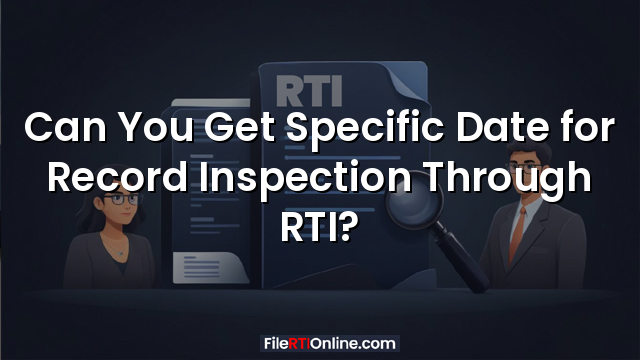
Many Indian citizens use the Right to Information (RTI) Act to access government records and information. However, sometimes the process of inspecting these records can be unclear, leading to frustration. This case highlights a crucial point: when you request to inspect government records under RTI, you are entitled to a specific date for that inspection, not just a vague invitation to visit whenever convenient. Understanding this can help you navigate the RTI process more effectively and ensure you get the information you need without unnecessary delays.
Background: What Information Was Sought
In this case, an applicant filed an RTI application with the Department of Revenue. They were seeking detailed information concerning the service record of a former President of CESTAT, Justice R.M.S Khandeparker, from his appointment date right up to his retirement. The applicant had already conducted an inspection of the relevant file, and the Public Information Officer (PIO) had provided some information. However, the applicant felt that the entire file was not made available and only certain pages were shown to them.
How the Public Authority Responded
The Public Information Officer (PIO) stated that the applicant had inspected the file multiple times on various dates, in connection with different RTI applications. They also mentioned that the applicant frequently visits the department for inspections. The PIO’s response was that the applicant was offered the inspection of the relevant file on their “next date of visit,” implying a flexible or unspecified arrangement rather than a fixed appointment. This approach was questioned applicant who felt they did not get to see the entire file.
The CIC Hearing: What Happened
During the second hearing before the Central Information Commission (CIC), the PIO reiterated their position about the applicant’s frequent visits and the offer to inspect the file on their next visit. They submitted details of previous inspections and copies provided. The applicant, however, maintained that the complete file was not made available for inspection, and only specific pages were shown. The core of the dispute revolved around the PIO’s failure to provide a definitive date for the inspection, leaving the applicant in a state of uncertainty.
The CIC Order and Its Significance
The CIC, in its decision, observed that when inviting an applicant for inspection of records, it is essential to provide a specific date. Simply stating that the applicant may inspect the file on their “next visit” is not sufficient. The Commission acknowledged that the PIO did not appear to have a malafide intention, and the information had already been provided to the applicant. Consequently, the CIC dropped the penalty proceedings against the PIO. However, the directive regarding providing a specific date for inspection carries significant weight for future RTI applications. It clarifies that the process of inspection should be structured and time-bound, demonstrating respect for the applicant’s right to access information.
Key Lessons for RTI Applicants
- Lesson 1: Importance of Specific Dates for Inspection: Always ensure that when you request an inspection of records, the PIO provides you with a specific date and time. This makes the process transparent and accountable.
- Lesson 2: Be Prepared to Detail Your Request: Clearly state what records you wish to inspect and why. If you believe you haven’t seen the entire relevant file, articulate this clearly during the process and before the CIC if necessary.
- Lesson 3: Document Everything: Keep copies of your RTI application, all correspondence with the PIO, and notes of any conversations or inspections. This documentation is crucial if you need to escalate your case to the CIC.
How to File a Similar RTI Application
- Draft your RTI Application: Clearly state the department you are addressing and the specific information you seek.
- Request Record Inspection: If the information requires inspection of documents, specifically request to inspect the relevant files and mention your availability or preferred dates if you have any.
- Submit the Application: Pay the required fee and submit the application to the appropriate PIO.
- Follow Up: If you don’t receive a response or a clear date for inspection within the stipulated time (usually 30 days), file a First Appeal.
Sample RTI question you can use:
“I wish to inspect the original files pertaining to [mention the subject matter of your query] from [start date] to [end date]. Please provide me with a specific date and time for this inspection within the next 15 days.”
Conclusion
This case underscores the importance of procedural fairness within the RTI framework. While the penalty against the PIO was dropped, the CIC’s observation is a clear directive for public authorities. As an RTI applicant, remember that your right to inspect records is a substantive part of the Act. Insisting on a specific date for inspection ensures that the process is not indefinitely postponed and that your right to information is upheld effectively. Always be clear, persistent, and well-documented in your RTI journey.